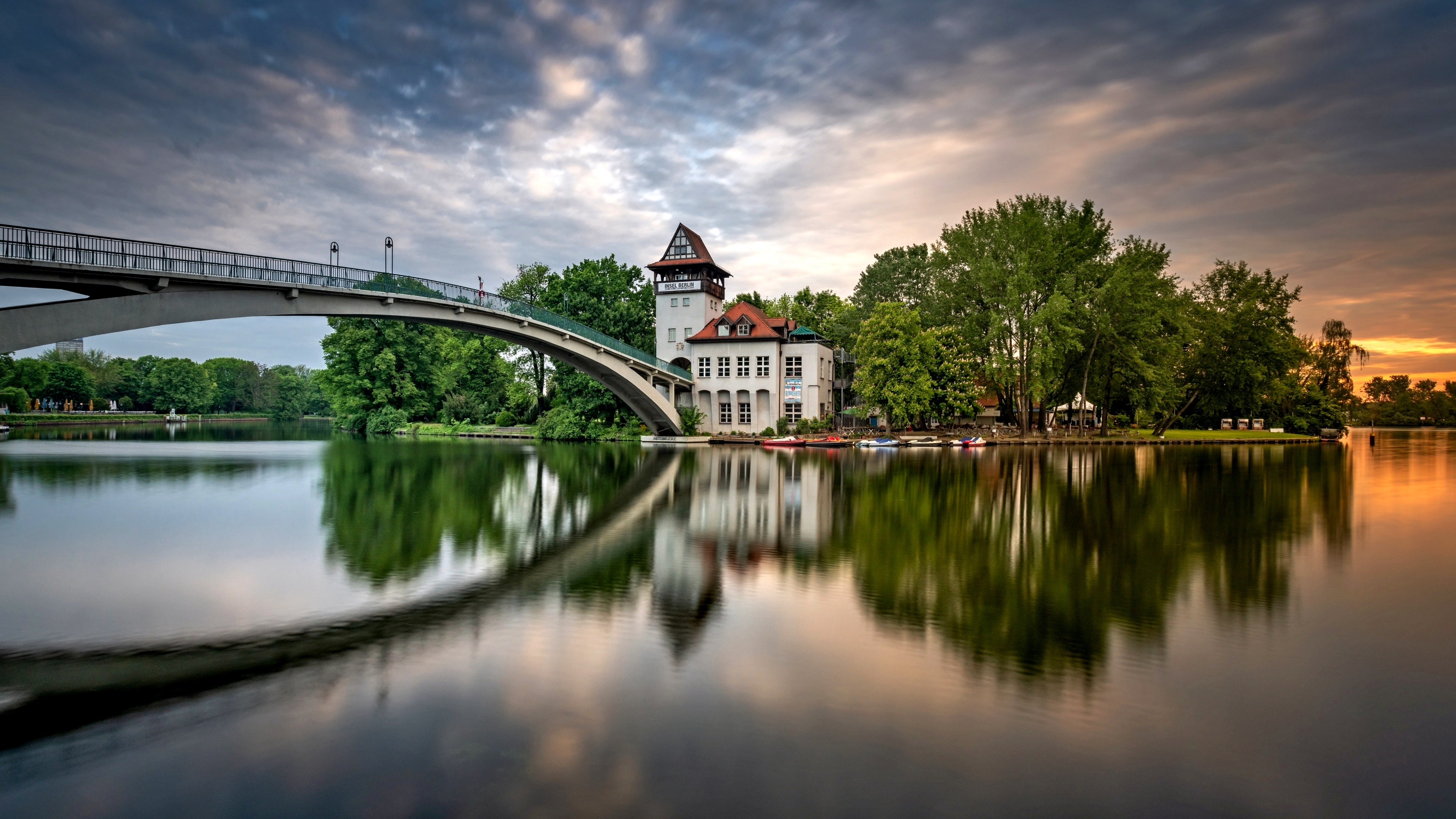
There is something fundamentally different about experiencing nature in 4K. It’s not just higher resolution—it’s a shift in perception. Details that once blurred into the background suddenly demand attention: the fine texture of tree bark, the subtle gradient of a sunset, the individual ripples across a mountain lake.
A 4K image transforms passive viewing into active observation. You begin to notice structure—how light filters through leaves, how shadows stretch and soften, how colors interact in layers rather than blocks. What seemed like a simple landscape reveals itself as a composition of thousands of micro-elements working together.
This level of clarity has a psychological effect. It slows you down. Your eyes linger longer, scanning the frame, exploring depth. In a world dominated by fast scrolling and compressed media, a high-resolution nature image invites the opposite behavior: stillness.
There is also an authenticity to it. Lower resolutions often simplify reality; 4K preserves its complexity. Imperfections remain visible—uneven terrain, asymmetrical branches, unpredictable patterns. These details make the scene feel more real, more present.
For creators, 4K opens creative flexibility. Cropping no longer destroys composition. Zooming retains integrity. A single frame can serve multiple purposes without sacrificing quality. It becomes both a final product and a source.
But beyond technical advantages, the real value lies in connection. A sharp image of nature doesn’t replace being there—but it reduces the distance. It reminds you what you’re missing, or what you’ve already experienced but didn’t fully see at the time.
In that sense, 4K isn’t about pixels. It’s about attention.